 |
|
World |
India |
Odisha 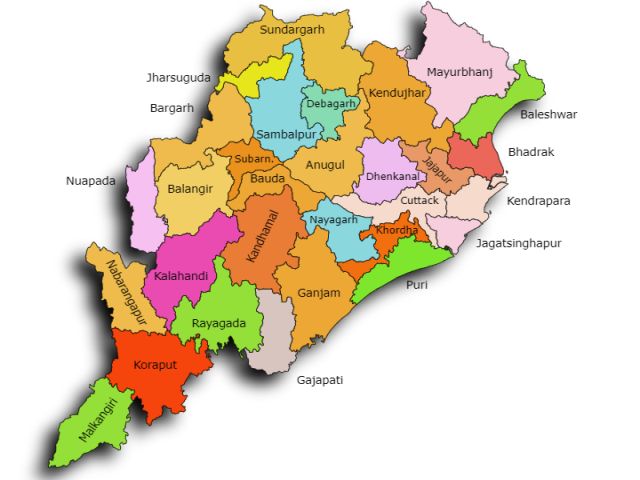 It neighbours the states of Jharkhand and West Bengal to the north, Chhattisgarh to the west, and Andhra Pradesh to the south. Odisha has a coastline of 485 kilometres (301 mi) along the Bay of Bengal in the Indian Ocean. The modern boundaries of Odisha were demarcated by the British Indian government, the Orissa Province was established on 1 April 1936, consisting of the Odia-speaking districts of Bihar and Orissa Province, Madras Presidency and Central Provinces. Utkala Dibasa (Odisha Day) is celebrated on 1 April. The region is also known as Utkala and is mentioned by this name in India's national anthem, Jana Gana Mana. The language of Odisha is Odia, which is one of the Classical languages of India. Cuttack was made the capital of the region by Anantavarman Chodaganga in c. 1135, after which the city was used as the capital by many rulers, through the British era until 1948. Thereafter, Bhubaneswar became the capital of Odisha. Odisha has been divided into 30 districts. These 30 districts have been placed under three different revenue divisions. The divisions are North, Central and South, with their headquarters at Sambalpur, Cuttack and Berhampur respectively. The Lingaraja Temple at Bhubaneswar has a 150-foot (46 m) high deula while the Jagannath Temple, Puri is about 200 feet (61 m) high and dominates the skyline. Only a portion of the Konark Sun Temple at Konark in Puri district, the largest of the temples of the "Holy Golden Triangle" exists today. Sarala Temple, regarded as one of the most spiritually elevated expressions of Shaktism is in Jagatsinghpur district. Maa Tarini Temple situated in Kendujhar district is also a famous pilgrimage destination. Bhitarkanika National Park in Kendrapada district is famous for its second largest mangrove ecosystem. The bird sanctuary in Chilika Lake (Asia's largest brackish water lake). The tiger reserve and waterfalls in Simlipal National Park, Mayurbhanj district are integral parts of eco-tourism in Odisha. Daringbadi is a hill station in the Kandhamal district. It is known as "Kashmir of Odisha", for its climatic similarity. Chandipur, in Baleswar district is a calm and serene site, is mostly unexplored by tourists. The unique speciality of this beach is the ebb tides that recede up to 4 km and tend to disappear rhythmically. In the western part of Odisha, Hirakud Dam in Sambalpur district is the longest earthen dam in the World. It also forms the biggest artificial lake in Asia. The Debrigarh Wildlife Sanctuary is situated near Hirakud Dam. Samaleswari Temple is a Hindu temple in Sambalpur city, dedicated to the goddess known as 'Samaleswari', the presiding deity of Sambalpur, is a strong religious force in western part of Odisha and Chhattisgarh state. The Leaning Temple of Huma is located near Sambalpur. The temple is dedicated to the Hindu god Lord Bimaleshwar. Sri Sri Harishankar Devasthana, is a temple on the slopes of Gandhamardhan hills, Balangir district. It is popular for its scenes of nature and connection to two Hindu lords, Vishnu and Shiva. On the opposite side of the Gandhamardhan hills is the temple of Sri Nrusinghanath, is situated at the foothills of Gandhamardhan Hill near Paikmal, Bargarh district. In the southern part of Odisha, The Taratarini Temple on the Kumari hills at the bank of the Rushikulya River near Berhampur city in Ganjam district. Here worshiped as the Breast Shrine (Sthana Peetha) and manifestations of Adi Shakti. The Tara Tarini Shakti Peetha is one of the oldest pilgrimage centers of the Mother Goddess and is one of four major ancient Tantra Peetha and Shakti Peethas in India. Deomali is a mountain peak of the Eastern Ghats. It is located in Koraput district. This peak with an elevation of about 1,672 m, is the highest peak in Odisha. |